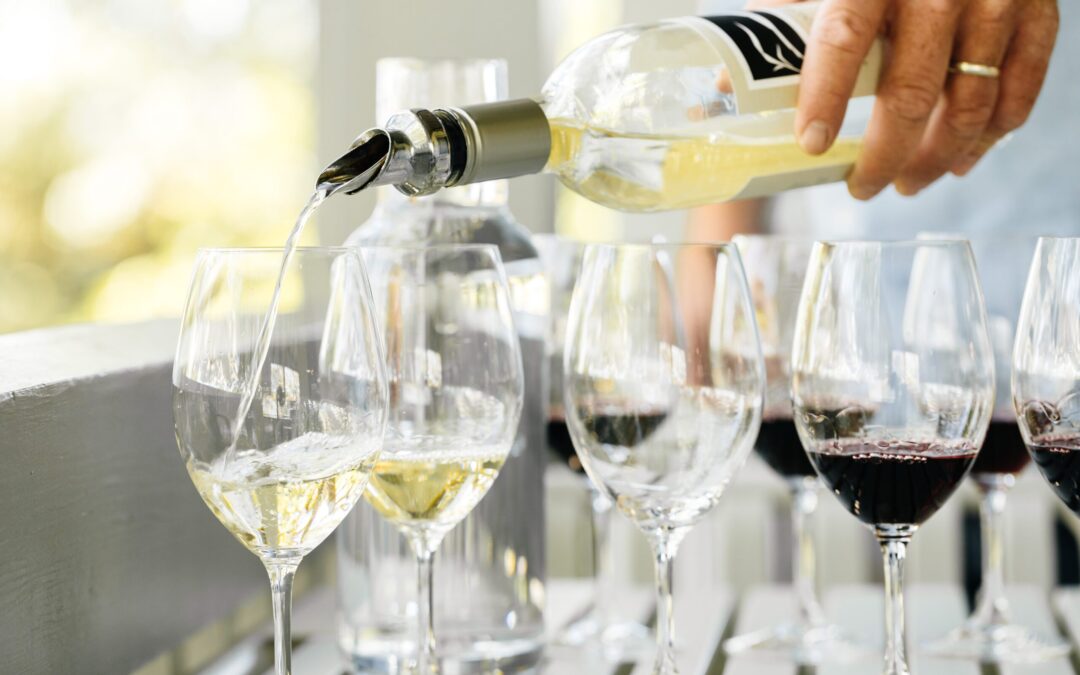
Picture that charming little bistro in a tucked-away French village whose name you can’t quite remember—the one with the unforgettable local cheese and wine. This is that wine.
Mary Taylor Wines partners with small growers in villages throughout the French and Italian countryside, importing their wines in limited quantities. Each bottle captures a sense of place and the character of the region it comes from, evoking memories of a favorite European adventure.
Join us on Thursday, June 25, from 4:00–6:00 PM for a delightful summer wine tasting featuring distinctive French wines sourced from these small towns and villages.
Our tasting will begin with a refreshing Touraine Rosé from the Loire Valley, followed by three crisp and elegant whites: a Chenonceaux Sauvignon Blanc, an Anjou Blanc, and a Bordeaux Blanc. We’ll conclude with a rich and expressive Bordeaux Rouge.
Come discover exceptional wines, remarkable value, and the stories behind the regions that inspire
As always, the tasting is complimentary, relaxed, and the perfect excuse to spend a summer afternoon in the harbor. We look forward to sharing these wonderful wines with you.
Make a night of it in Sunapee Harbor by using the tasting as a starting point to finish at Wildwood Smokehouse, the Blue Canoe, Fenton’s or Hoptimystic.
Touraine Rose
The Domaine des Echardières (meaning woodcock) is found in Angé. The cellar is cut into the limestone, or Turonian Calcaire, that looms over the the popular Route des Varennes. Here, along the Cher River, made famous for its Chateaux and top-quality goat cheese, as well as its wine. Luc Poullain, who also makes our fabulous Touraine Sauvignon Blanc is a truly independent artisan, working with the limestone both from above and in its cool, humid caves. For a dozen years, Luc has also been the president of the newly formed AOP Chenonceau – named after the magical castle and its local vineyards.
This rosé is a classic blend of 5 preeminent varietals found in this area. Pineau d’Aunis brings elegance, Cot (Malbec) for sweetness and body, Cabernet Franc for structure, Grolleau for perfume, and Gamay for grip – and of course limestone for tension and elegance. The result is a rosé that is profound, delicious, refreshing, and deep.
Size: 750ml
Appellation: Touraine AOC
Soil Type: Sandy Siliceous Clay and Limestone
Varieties: 20% Gamay, 20% Cabernet Franc 20% Pineau d’Aunis, 20% Grolleau, 20% Cot
Age of Vines: 30 years average
Farming: HVE3
Alcohol: 12.3%
Barrel Details: Stainless steel
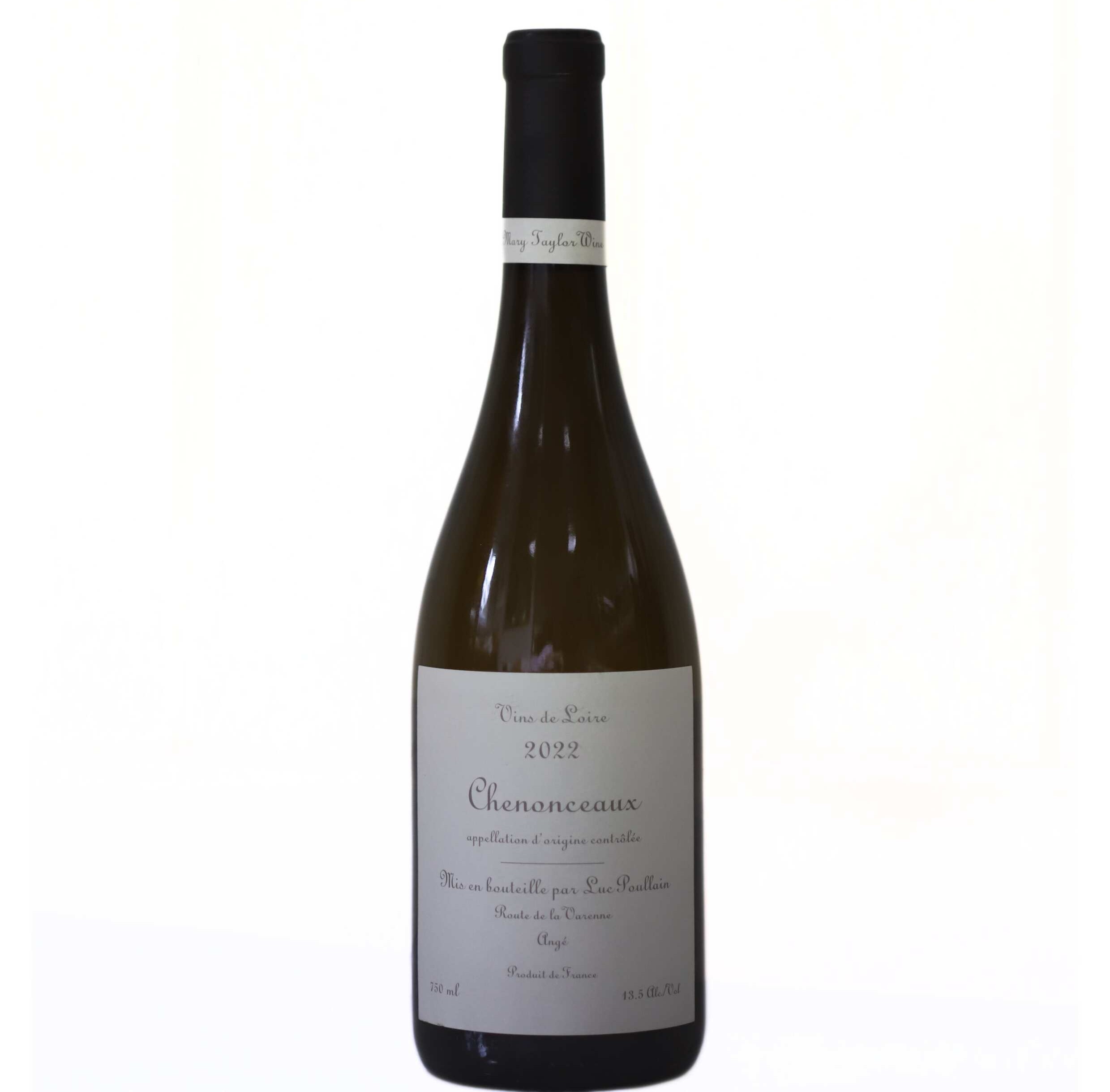
Chenonceaux
Another wonderful wine from Luc Poullain in the Touraine. The AOC Touraine Chenonceaux is a recent appellation directly related to the prestigious Château de Chenonceaux which was built in 1513 and was once occupied by a series of powerful women such as Diane de Poitiers and Catherine de Médicis. The soil is notable for being pure chalk.
This Touraine Chenonceaux Blanc from Domaine des Échardières is made from Sauvignon vines planted on the clay-limestone and flint slopes of the left bank of the Cher River. The vines are carefully selected from a terroir that gives the wine tension, precision, and elegance.
Fermented at low temperature in stainless steel vats to preserve freshness, it is aged
for eight months on fine lees with regular stirring (bâtonnage), which adds richness
and depth.
The nose reveals aromas of ripe white fruits—peach, pear, quince—enhanced by an exotic touch. On the palate, it offers a subtle balance of freshness, volume, and fruitiness, with a beautiful, lingering finish. Served chilled (8°C), it pairs perfectly with grilled fish such as sea bass or turbot, scallops, aged hard cheeses (Comté, Beaufort, Basque sheep’s cheese), as well as spicy Thai cuisine or oysters.
Size : 750 ml
Appellation : Touraine Chenonceaux AOP
Soils types : sandy siliceous clay and limestone
Varieties : 100% sauvignon blanc
Age of vines : 30 years average
Farming : sustainable
Alcohol : 12.5%
Barrel details : Stainless steel
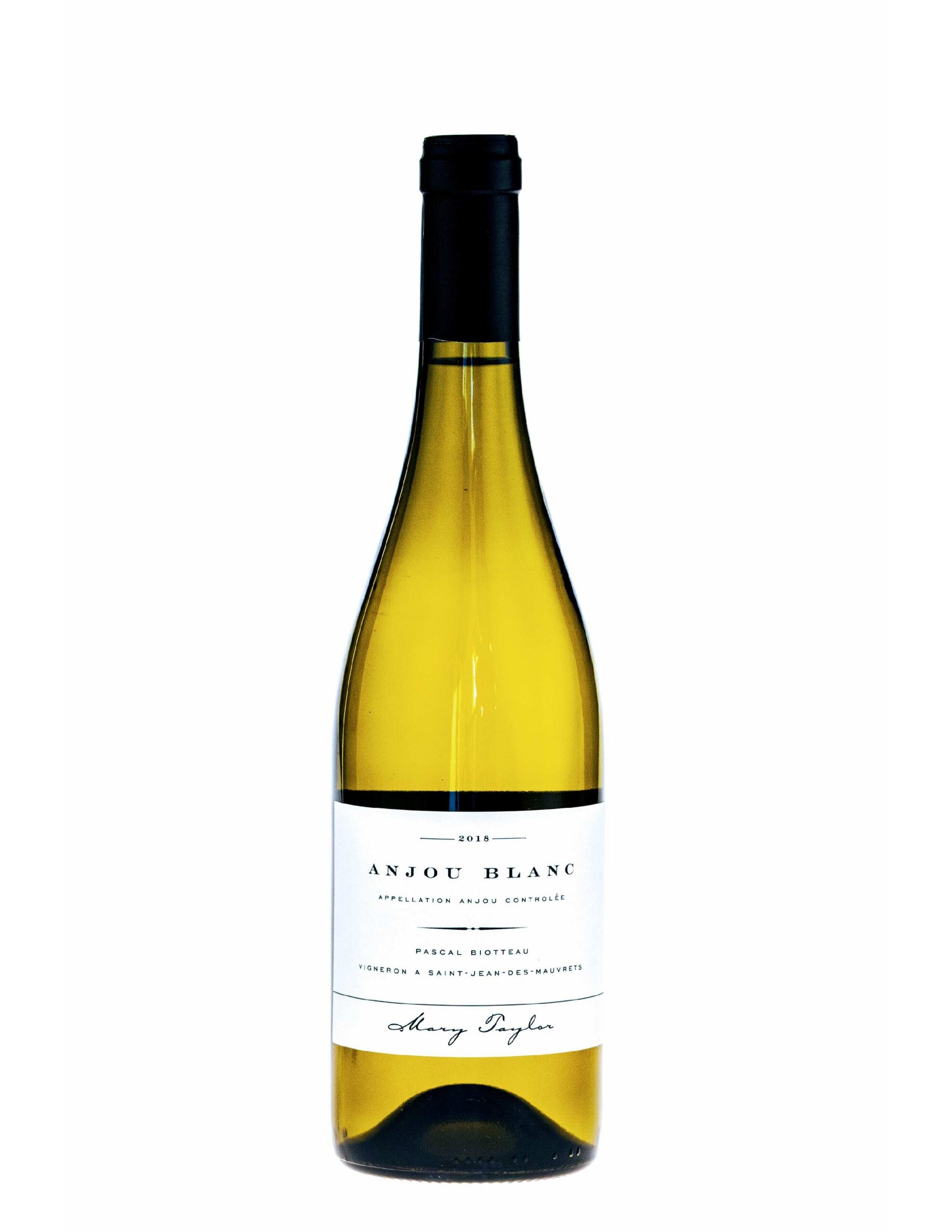
Anjou Blanc
Geographically, Anjou is divided into two dominant profiles, based on soil types. The first, known as “Anjou Blanc,” lies toward the west of the appellation, where chalky limestone soils impart a lighter, more energetic expression of Chenin. Then there’s “Anjou Noir,” referring to the dark volcanic schist soils of the easternmost edge of the Massif Armorican, where Chenin assumes a richer, more full-bodied character.
Sourced from vineyards that fall exactly along the border of Anjou’s two sub-regions, this gorgeously subtle expression from fourth-generation winemaker Pascal Biotteau comes from the village of Saint-Jean-de-Mauvrets, situated on the old Roman road from Angers to Poitiers. Combining the fresh acidity of the “Anjou Blanc” limestone with the flinty, mouthcoating richness of the “Anjou Noir,” this wine offers a beautiful composite picture of Anjou as a whole, with honeyed notes of apricot giving way to a tangy mineral finish.
Size: 750ml
Appellation: Anjou AOC
Soil Type: Slate, sandstone and carboniferous schists
Varieties: 100% Chenin Blanc Age of Vines: 25 year average
Farming: Sustainable, HVE 3
Alcohol: 12%
Aging Details: Stainless steel
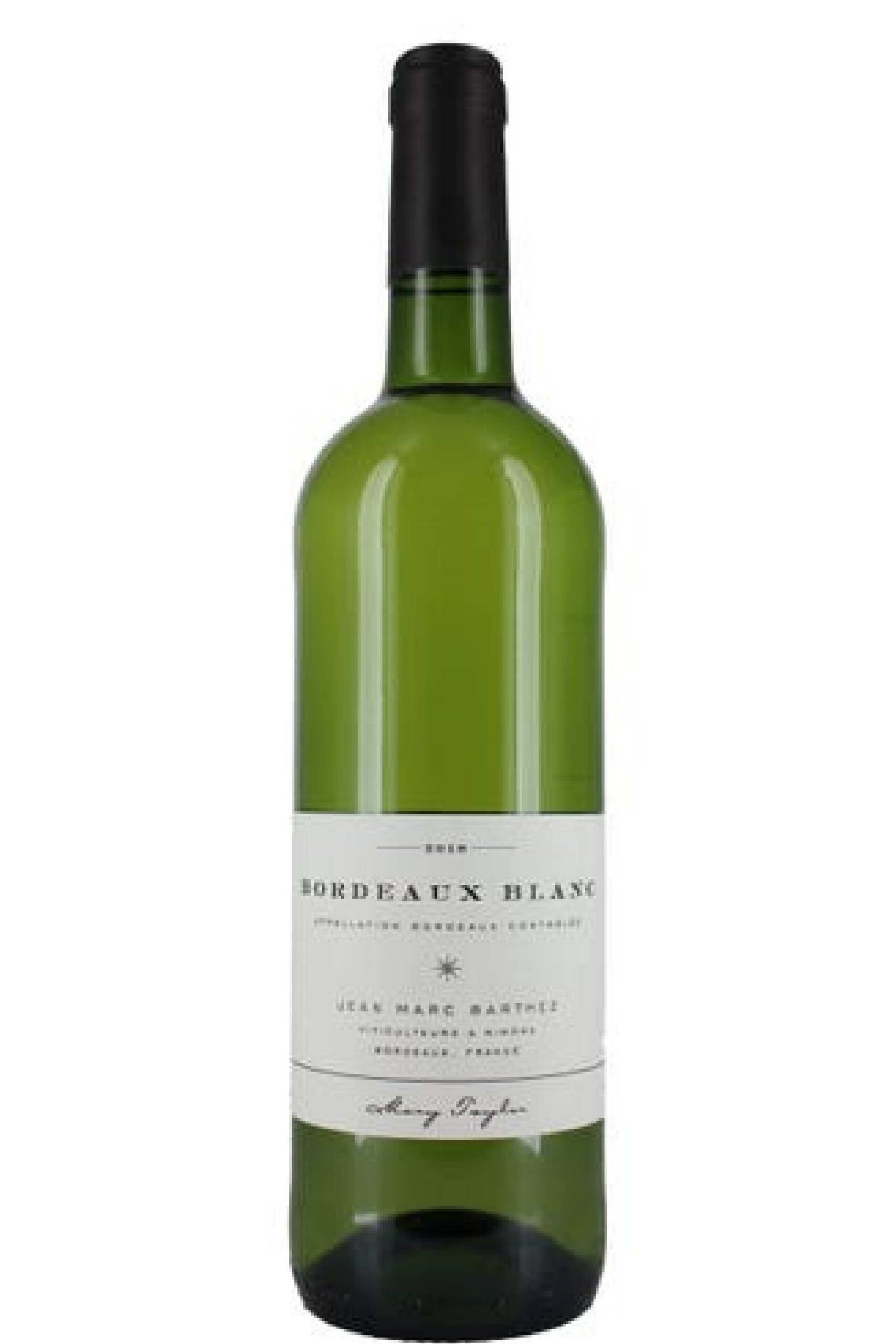
Bordeaux Blanc
Better known for red wine, the region of Bordeaux still manages to produce nearly seven million cases of white wine annually, which can be every bit as distinctive as its iconic reds. Geographically, the epicenter of the area’s dry white production lies in the Entre-Deux-Mers (“between the two tides”) sub-region, situated between the Garonne and Dordogne rivers. The area’s gravel-rich soils make it ideal for growing crisp, racy, mineral-driven whites that represent a completely unique expression of the popular Sauvignon Blanc grape.
The best examples—such as this one from artisan winemaker Jean Marc Barthez, who serves as president of a small cooperative winery in the ancient village of Monségur—will overturn everything you’ve come to expect from the usual lineup of “varietal” Sauvignon Blanc from Chile or New Zealand. Sourced from vineyards that surround the winery and fermented without oak to preserve the underlying expression of its classic terroir, this is Sauvignon Blanc as channeled through the unique prism of Bordeaux. With its cleansing acidity and flavors of citrus and melon, it possesses the deeper texture, elegance, and richness of body that are the region’s hallmarks.
According to Jean Marc, part of that depth also results from the small touch of Sémillon (the region’s “other” white grape) he includes in the blend, which imparts a certain “je ne sais quoi” that immediately conjures white Bordeaux. A quintessential oyster wine, according to Mary it has all the necessary structure to stand up to richer fish and shellfish dishes like pan-seared trout or broiled lobster.
Size: 750ml Appellation: Bordeaux AOC Soil Type: Alluvial sand and clay limestone Varieties: 95% Sauvignon Blanc, 5% Semillon Age of Vines: 30 years Farming: Sustainable, HVE Alcohol: 12% Barrel Details: Stainless steel
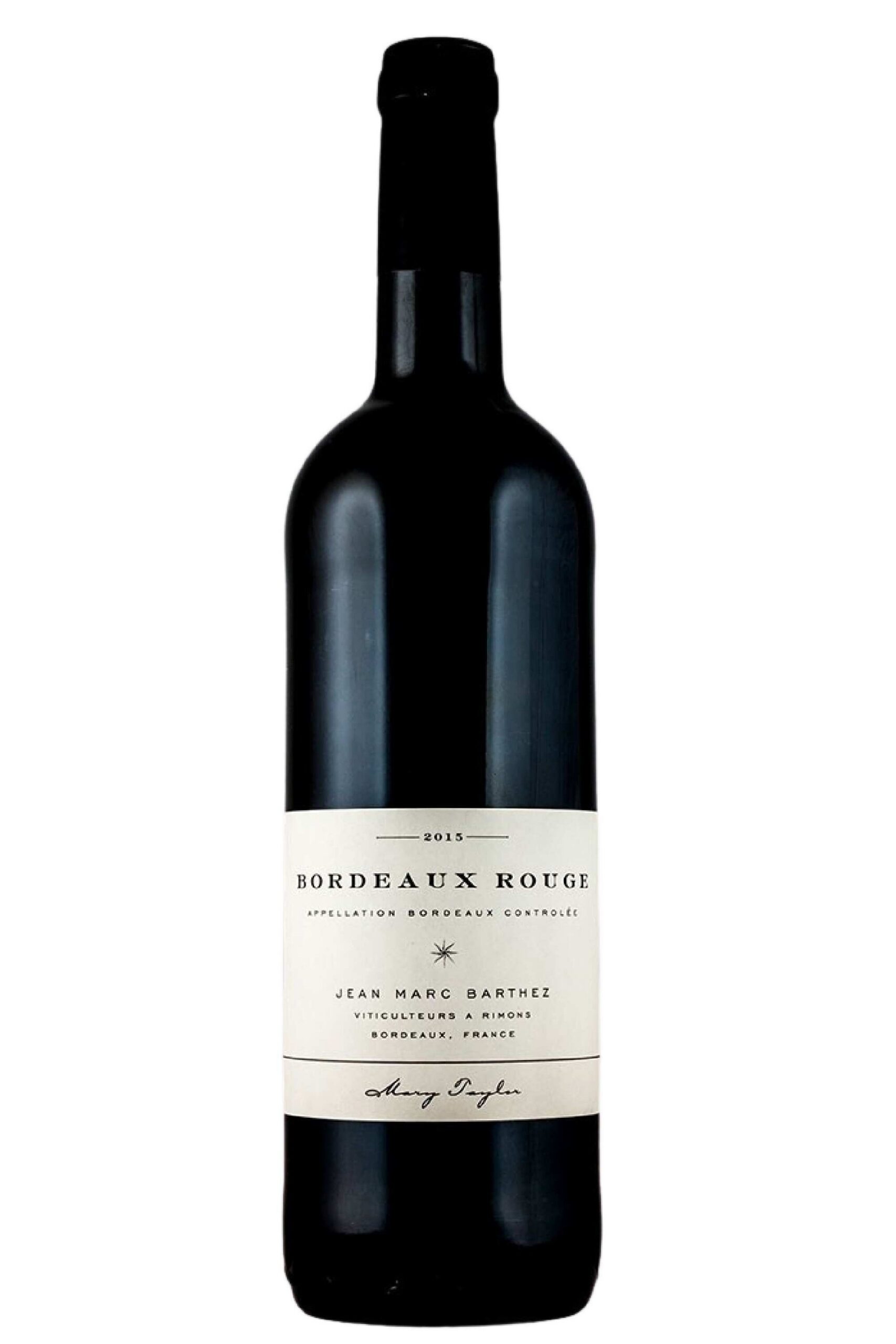
Bordeaux Rouge
The world’s most famous wine region, Bordeaux has been popularly defined by the luxury stereotypes of its exclusive “first growth” châteaux, which produce some of today’s most highly coveted (and prohibitively expensive) wines. But beyond this façade of wealth, there lies an “alternative” Bordeaux— one populated by the small independent estates that line the banks of the Garonne and the Dordogne rivers. This is the Bordeaux to which winemaker Jean Marc Barthez belongs.
The archetypal “dirt-under-the-fingernails” grower, far more likely to be spotted driving a tractor than a Porsche, he serves as the president of a small co-operative winery in Monségur, an ancient village founded by Eleanor of Aquitaine in the 13th century. There, he oversees a handful of growers who cultivate small family vineyards—many of which are certified organic—to produce Bordeaux wines that their friends and neighbors can actually afford.
Grown in vineyards that surround the cooperative, this easy-drinking yet elegant Bordeaux is neither glitzy nor flashy, but perfectly embodies the region’s rural soul. A signature blend of 50% Merlot with equal parts Cabernet Franc and Cabernet Sauvignon, it possesses much of the dark-fruited complexity that made the region famous in the first place, but rendered in a brighter, more refreshing frame. This amazing “drinkability” is highlighted by the absence of oak during the aging process, which allows a bursting acidity and graphite minerality (imagine the lead of fresh pencil shavings) to shine through on the palate.
Size: 750ml Appellation: Bordeaux AOC Soil Type: Alluvial sand and clay limestone Varieties: 50% Merlot, 25% Cabernet Franc, 25% Cabernet Sauvignon Age of Vines: 30 years Farming: Sustainable, HVE Alcohol: 13% Aging Details: Stainless steel